The Bretonne Pie Noir: discover France’s smallest cow, with a big Breton heart
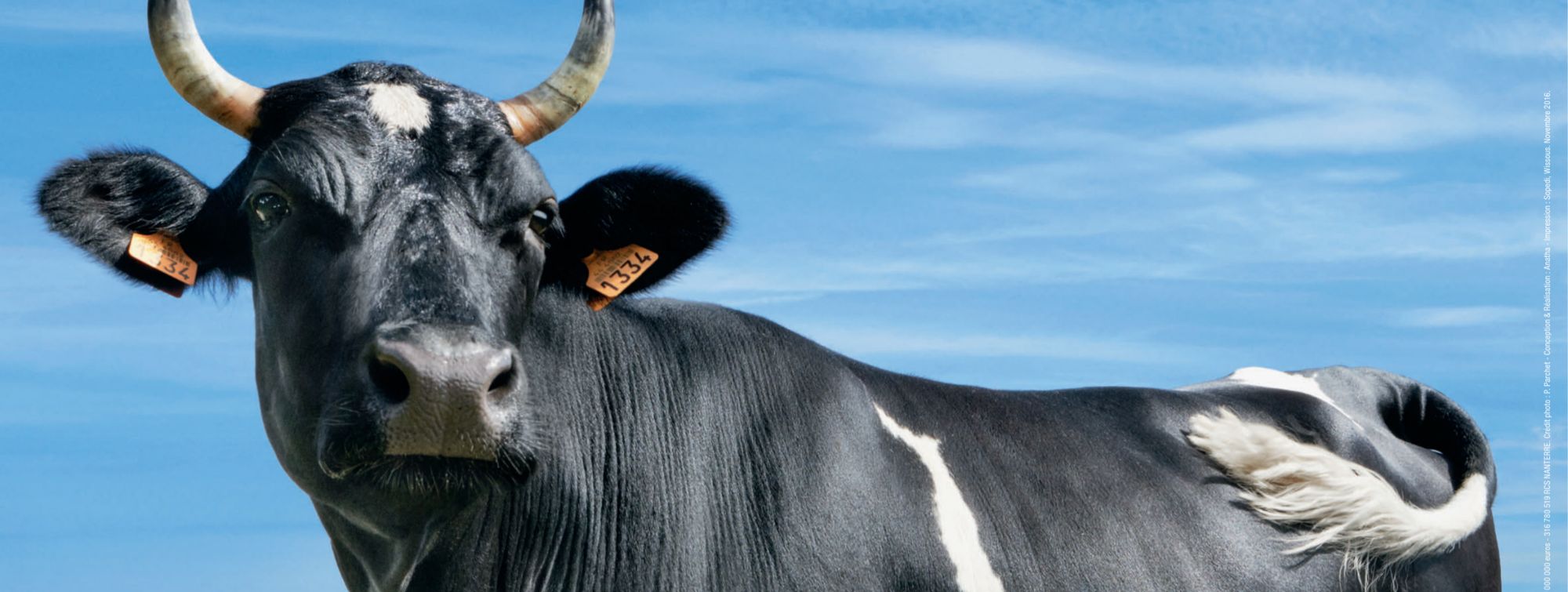
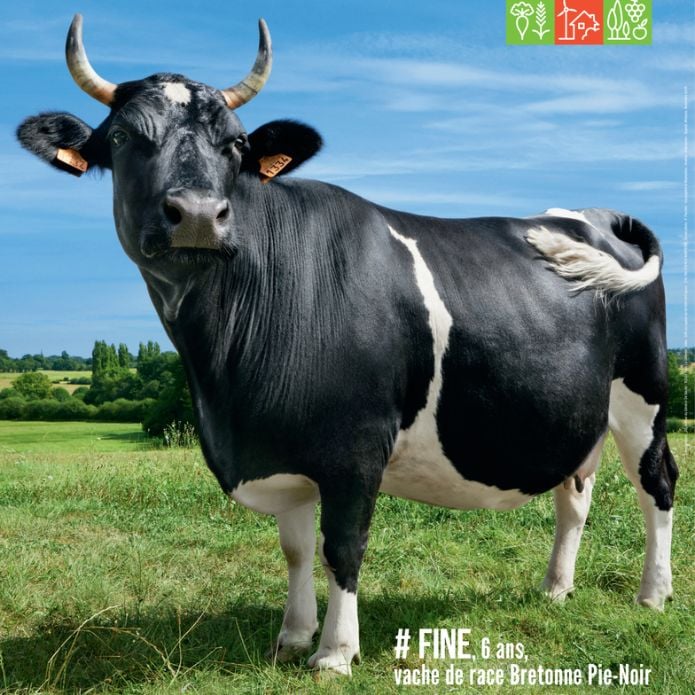
Meet Fine, the 2017 Bretonne Pie Noir ambassador for the International Agricultural Show
Who is Fine ?
In 2017, the Bretonne Pie Noir breed took centre stage at the International Agricultural Show, represented by Fine, its official ambassador.
Aged six at the time of the show, this cow was reared by Cédric Briand at the Ferme des 7 Chemins in Plessé, in the Loire-Atlantique department.
Born in March 2010, Fine came from the herd of Cédric Briand and his partners, who processed the milk from their Bretonne Pie Noir cows into Gwell cheese, butter and cream, sold on the farm and through local supply chains.
Through Fine, the Fair highlighted a breed with a small population, its history, its breeding qualities and the local promotion initiatives led by its breeders.
How can you recognise a Bretonne Pie Noir cow?
The Bretonne Pie Noir is the smallest French cattle breed. It stands on average 1.17 m at the withers and weighs between 350 and 450 kg as an adult.
Its coat is predominantly black and white, usually with a white patch on the forehead, a white ‘scarf’ and a white ‘belt’.
There are also red piebald or bluish-grey piebald coats, known as ‘glazik’. It has a slender head, and the tips of its horns usually form a lyre shape. Its elongated body, deep chest and slender limbs complete its distinctive silhouette.
Spotlight on the Bretonne Pie Noir
Originating in Brittany, this breed of cattle is renowned for its hardiness, its low maintenance requirements and the richness of its milk.
Long threatened with extinction, it was saved thanks to a conservation programme launched in 1976. Today, it is once again winning over farmers with its ease of rearing, its dairy qualities and its ability to make the most of local resources.
A small cow that has managed to retain all its unique characteristics!
Where does the Bretonne Pie Noir breed come from?
The Bretonne Pie Noir is an ancient breed, shaped by the landscapes and farming conditions of Brittany.
Its historical origins lie mainly in southern Brittany, particularly in Finistère and Morbihan. At the start of the 20th century, it was one of France’s major cattle breeds.
However, after the Second World War, the drive for productivity and the development of more specialised dairy breeds led to a significant decline in its numbers. Threatened with extinction, it became the subject of the first national conservation plan dedicated to a French cattle breed in 1976.
The Bretonne Pie Noir in figures
- 3,481 cows recorded, of which 2,827 are over two years old (data from the GIE Élevages de Bretagne, July 2026)
- Around 450 breeders, including 80 professional breeders.
- Average height at the withers: 1.17 m.
- Adult cows weigh between 350 and 450 kg.
A small, hardy cow with a wide range of uses
The Bretonne Pie Noir is a dual-purpose breed, suitable for both dairy and suckler farming. It can be reared for its milk, which is often processed directly on the farm into butter, cream and cheese, but also for its meat, which is prized for its tenderness.
Hardy and economical, it makes good use of grass and coarse fodder. Well-suited to Breton soils, including poor or wet land, it fits well into extensive farming systems. It is also recognised for its maternal qualities, fertility and ease of calving.
Gwell, an iconic dairy speciality
The milk of the Bretonne Pie Noir is particularly rich and well-suited to processing.
It is used to produce a wide variety of farm products: butter, cream, fresh or mature cheeses, yoghurts and fromage blanc.
Among these specialities, Gwell holds a special place. This traditional Breton fermented milk, also known as ‘gros-lait’, is made from the milk of the Bretonne Pie Noir.
Its name has been protected by a trademark registered with the INPI since 1993, the use of which is managed by the Association des Paysans Producteurs de Gwell (APPG). The process of obtaining PDO status is currently underway.