The Gasconne des Pyrénées: discover the cow that's got what it takes!
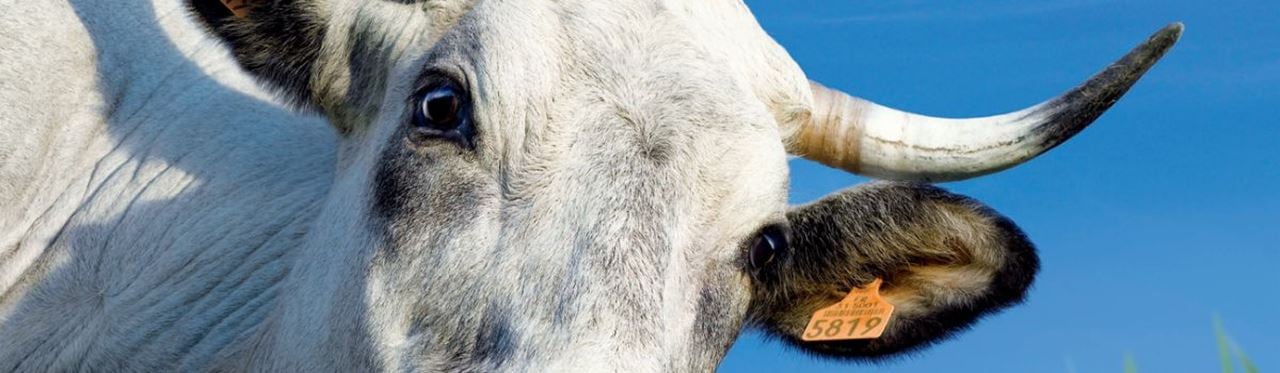
Meet Valentine, the 2012 Gasconne ambassador for the International Agricultural Show
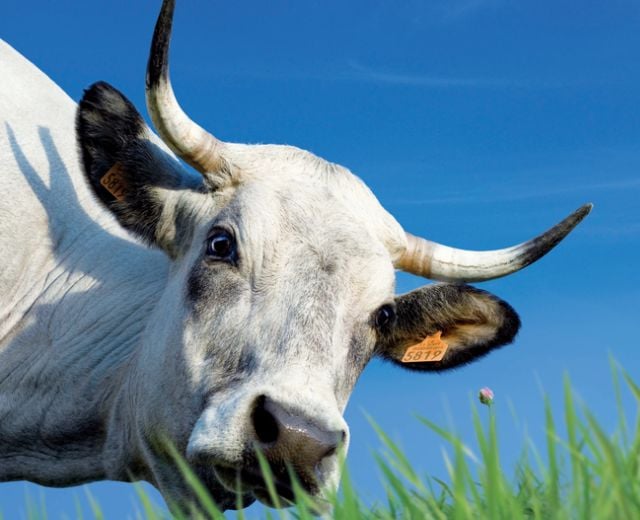
Who is Valentine ?
In 2012, Valentine proudly represented the Gasconne des Pyrénées breed when she was chosen as the official cow ambassador of the Salon International de l'Agriculture.
Aged seven, she was born and raised on Francis Estadieu's farm in Soueich, Haute-Garonne, at the foot of the Pyrenees.
Already a familiar face at agricultural shows, Valentine had notably won the female championship at the Salon in 2008.
With her silvery-grey coat and distinctive horns, she perfectly embodied the qualities of her breed.
Her selection as the show's official cow ambassador was a well-deserved recognition for her breeder and a fantastic opportunity to shine a spotlight on this mountain cattle breed.
How can you recognise a Gasconne des Pyrénées cow?
Its most distinctive feature is its silvery-grey coat, which varies in shade from one animal to another.
Its hair is short and dense and may darken in winter, with darker areas appearing on certain parts of the body. Another characteristic is its black extremities.
The tips of its horns, mucous membranes, areas around its eyes and hooves also have dark pigmentation. Its horns, light-coloured at the base and darker at the tips, curve into a distinctive lyre shape.
Spotlight on the Gasconne
This hardy cattle breed, originating from the Pyrenees, is perfectly adapted to steep terrain and harsh weather conditions. Today, it is primarily raised for beef production.
Where does the Gasconne des Pyrénées breed come from?
The Gasconne des Pyrénées takes its name from its region of origin: the central Pyrenees and their foothills in south-western France.
For generations, this breed has been an integral part of livestock farming in these mountainous areas, where it has developed a remarkable ability to adapt. Historically, Gasconne cattle were used as draught animals for agricultural work.
This long history of selective breeding has shaped a strong, resilient breed that is particularly well suited to challenging terrain. In 2019, the breed officially adopted the name Gasconne des Pyrénées, reinforcing its regional roots and mountain heritage.
The Gasconne des Pyrénées in figures
17,821 cows in France in 2021, according to data from the BDNI (French National Animal Identification Database). A breed renowned for its maternal qualities
The Gasconne des Pyrénées is particularly valued by farmers for its excellent maternal qualities.
Its fertility, longevity and ease of calving make it especially well suited to suckler cattle farming systems.
Thanks to its relatively low birth-weight calves, the breed is known for its ease of calving. It is also recognised for its ability to feed and rear its calves. Its good productivity and longevity enable farmers to manage their herds in extensive farming systems while maintaining consistent production.
Combined with its hardiness, these qualities make the Gasconne des Pyrénées a valuable asset to mountain livestock farming.
High-quality beef recognised with the Label Rouge quality mark
Although the Gasconne des Pyrénées is primarily a suckler cattle breed, it is also renowned for the quality of its beef. Its meat is prized for its tenderness, marbling and flavour.
First awarded in 1997, the Label Rouge Bœuf Gascon quality mark was renamed Label Rouge Gasconne des Pyrénées in 2021.
It now includes two commercial categories: "Le Vrai Bœuf!", for castrated male cattle aged at least 36 months, and "Laissez-vous fondre!", for cows and heifers. In the latter category, cows may be slaughtered up to 120 months of age, while heifers must be between 28 and 48 months old.
This quality scheme helps promote different categories of cattle and introduces consumers to beef recognised for its exceptional flavour and eating qualities.
-
What is the Gasconne des Pyrénées breed and where does it come from?The Gasconne des Pyrénées is a hardy cattle breed originating from the central Pyrenees and their foothills in south-western France. Historically used for agricultural work and as draught animals, it is now primarily raised for beef production. Particularly well adapted to mountainous regions, the breed is valued for its robustness, endurance and maternal qualities.
-
How can you recognise a Gasconne des Pyrénées cow?A Gasconne des Pyrénées cow can be recognised by its silvery-grey coat, which varies in shade and may darken during winter. It has dark pigmentation around its eyes, on its mucous membranes and hooves. Its distinctive lyre-shaped horns are light-coloured at the base and darker at the tips.
-
Is the Gasconne des Pyrénées a beef or dairy breed?The Gasconne des Pyrénées is primarily a beef cattle breed, raised in suckler farming systems. It is valued for its meat quality, as well as its fertility, longevity and ease of calving. Its beef is notably recognised by the Label Rouge Gasconne des Pyrénées quality mark, which highlights its excellent eating qualities.
-
Who is Valentine, the official cow ambassador of the Salon International de l'Agriculture 2012?Valentine is a Gasconne des Pyrénées cow chosen as the official cow ambassador of the Salon International de l'Agriculture 2012. Born and raised on Francis Estadieu's farm in Soueich, Haute-Garonne, she was seven years old when she was selected. Recognisable by her silvery-grey coat and distinctive horns, she had previously won the female championship at the Salon in 2008. Her selection as the show's ambassador helped showcase this iconic cattle breed from the Pyrenees.