The Gasconne des Pyrénées: discover the cow that's got what it takes!
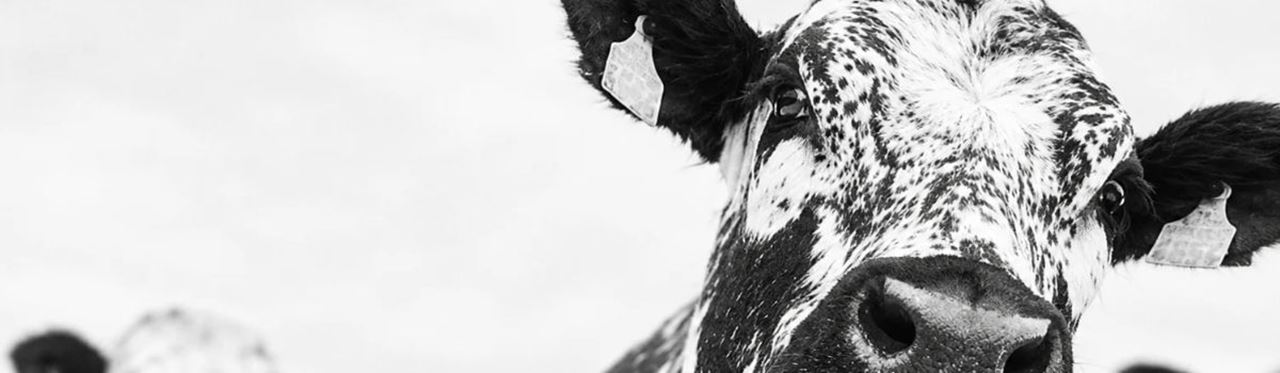
Meet Candy, the 2011 Vosgienne ambassador for the International Agricultural Show
Who is Candy ?
In 2011, the Vosgienne breed took centre stage at the Paris International Agricultural Show, with Candy as its official representative.
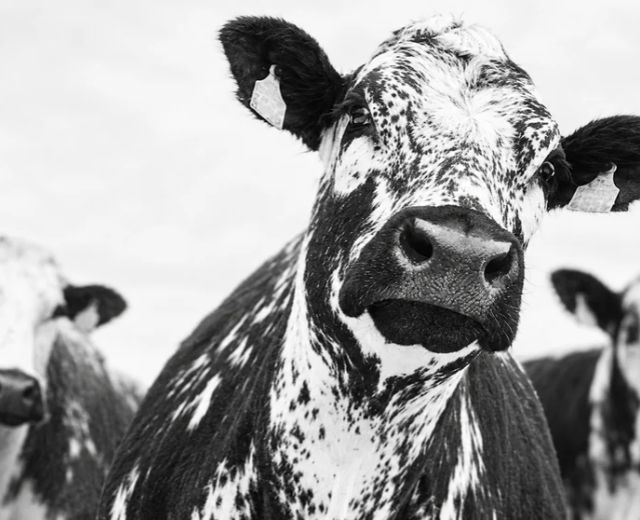
Four years old and weighing 650 kg, this cow, with her distinctive black-and-white speckled coat, was raised on Marc Spenlé’s farm in Anjeux, Haute-Saône.
Candy had already attracted attention at the 2010 Show, where she was awarded the Reserve Champion title.
She was subsequently chosen to represent her breed on the official poster for the 2011 edition.
Through Candy, the Show shone a spotlight on a breed that had come close to extinction, as well as the dedication of breeders working to preserve this important part of the Vosges region’s cattle heritage.
How can you recognise a Vosgienne cow?
The Vosgienne is a medium-sized cattle breed, easily recognised by its black-and-white coat, although some may have red-and-white markings. Its coat features two irregular white bands: one running along its back, from the neck to the tail, and the other extending underneath its belly, from the chest to the perineum.
Its head is generally white with speckled markings, while its ears are black. Its medium-length horns display three distinct colours: grey at the base, white in the middle, and black or brown at the tips.
Spotlight on the Vosgienne
The Vosgienne is a true ambassador for the Vosges Mountains. This hardy cattle breed, valued for both its milk and suckler qualities, is perfectly adapted to steep terrain and mountain living conditions. Renowned for its resilience, longevity and rich milk, it plays an important role in the production of iconic regional cheeses.
Where does the Vosgienne breed come from?
As its name suggests, the Vosgienne breed originates from the Vosges Mountains in eastern France. Over the centuries, it has adapted to the terrain and climate of the mid-altitude mountains.
Traditionally used for agricultural work and milk production, it played an essential role in the economy of families in the Vosges region, who turned its milk into cheese.
The Vosgienne in figures
Approximately 7,000 cows recorded in France (AgroParisTech data, updated in 2025).
A hardy mountain breed with excellent dairy and beef qualities
The Vosgienne is a dual-purpose breed, primarily raised for milk production. It produces well-balanced milk, rich in valuable milk solids, making it particularly suitable for cheese production.
However, one of its greatest strengths is its ability to adapt to mountain environments.
An excellent walker, it moves easily across steep terrain thanks to its strong legs and durable hooves.
Hardy and undemanding, it makes good use of coarse forage and can withstand temperature fluctuations. Its ease of calving, fertility and longevity are also highly valued by breeders.
The Vosgienne also has good beef-producing qualities.
Its meat, appreciated for its flavour, provides added value to both calves and cull cows. Iconic cheeses from the Vosges Mountains Vosgienne milk is notably used to produce Munster, a cheese with Protected Designation of Origin (PDO) status.
It is also used to make Cœur de Massif, a regional cheese launched in 2015 and produced using milk from herds made up predominantly of Vosgienne cattle.
Another speciality of the Vosges Mountains is Bargkass, a traditional cow’s milk cheese.
The collective brand "Race Bovine Vosgienne", established in 2012, also helps identify and promote dairy and meat products from farms committed to preserving and promoting the breed.
-
What is the Vosgienne breed and where does it come from?The Vosgienne is a hardy cattle breed originating from the Vosges Mountains in eastern France. Well adapted to steep terrain and mid-altitude mountain climates, it is valued for its resilience, longevity and dairy qualities. Traditionally used for agricultural work and milk production, the breed now plays an important role in preserving the agricultural and cheesemaking heritage of the Vosges region.
-
How can you recognise a Vosgienne cow?A Vosgienne cow is easily recognised by its distinctive black-and-white coat, occasionally red-and-white, featuring two irregular white bands along its back and underneath its belly. Its head is generally white with speckled markings, while its ears are black. Its medium-length horns display three colours: grey at the base, white in the middle, and black or brown at the tips. Candy, the official mascot of the 2011 Paris International Agricultural Show, had a distinctive black-and-white speckled coat.
-
Is the Vosgienne a beef or dairy breed?The Vosgienne is a dual-purpose cattle breed, primarily raised for milk production. Its milk, rich in valuable milk solids, is particularly suitable for making cheeses such as Munster PDO, Cœur de Massif and Bargkass. The breed also has good beef-producing qualities, allowing breeders to make use of both calves and cull cows. Its hardiness and ability to graze on mountain pastures make it particularly popular with farmers.
-
Who is Candy, the official mascot of the 2011 Paris International Agricultural Show?Candy is a Vosgienne cow chosen as the official mascot of the 2011 Paris International Agricultural Show. Four years old and weighing 650 kg at the time, she was raised by Marc Spenlé in Anjeux, Haute-Saône. Recognisable by her black-and-white speckled coat, she had already won the Reserve Champion title at the 2010 competition. Through Candy, the Show celebrated a breed that had come close to extinction and highlighted the dedication of breeders working to preserve this important part of France's cattle heritage.