
The Limousin: discover the champion beef breed
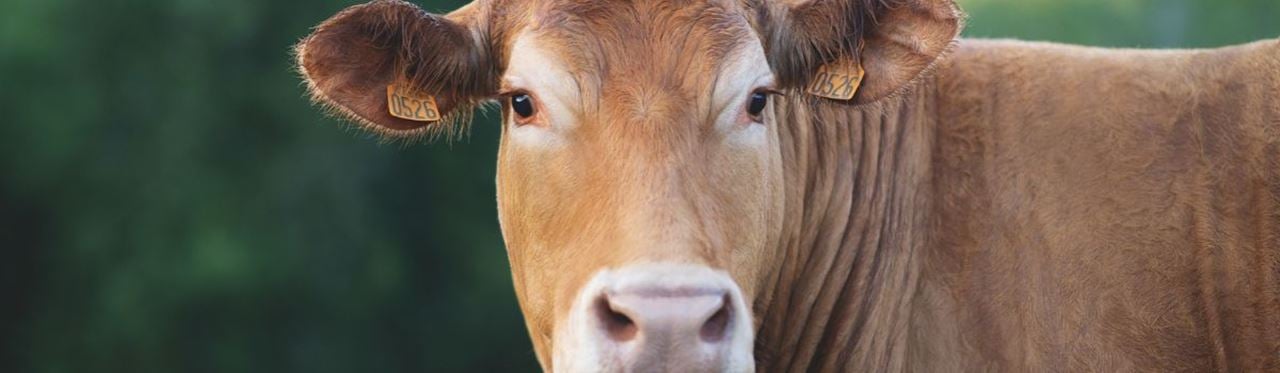
Meet Oupette, the 2025 Limousine ambassador for the International Agricultural Show
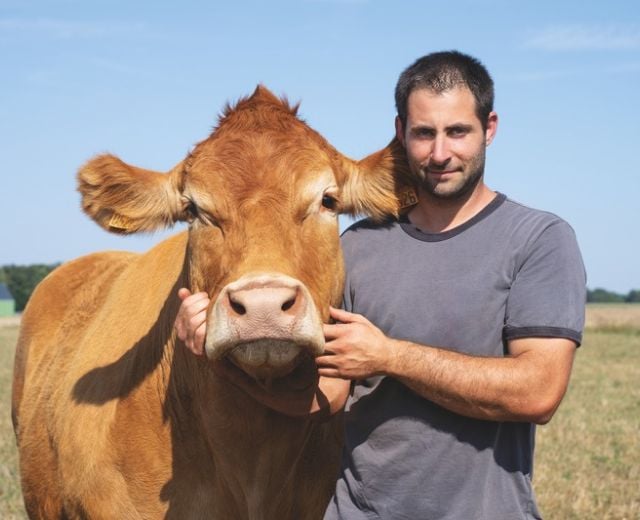
Who is Oupette?
Having been with her breeder since her birth in September 2018, Oupette has become the mascot of Alexandre’s farm thanks to her distinctive coat.
With her bright wheat-coloured to pale red coat, lighter markings around her eyes and muzzle, and a small tuft on her head, she has represented the breed to the general public. Oupette doesn’t have horns: she’s one of the naturally hornless Limousin cattle.
Also a regular at shows, she began representing the Limousin breed in 2019, at the Poitiers departmental show, where she took first place in her class. Four years later, she repeated her performance at the Chabanais regional competition in Charente.
His breeder, Alexandre Humeau, also highlighted his profession and his commitment to the breed.
A closer look at the Limousin breed
Originating from Limousin, this breed has become established far beyond its region of origin thanks to its suitability for meat production, its hardiness and its maternal qualities. Now reared throughout France and found on all five continents, it has become a benchmark in suckler cattle farming.
How can you recognise a Limousine?
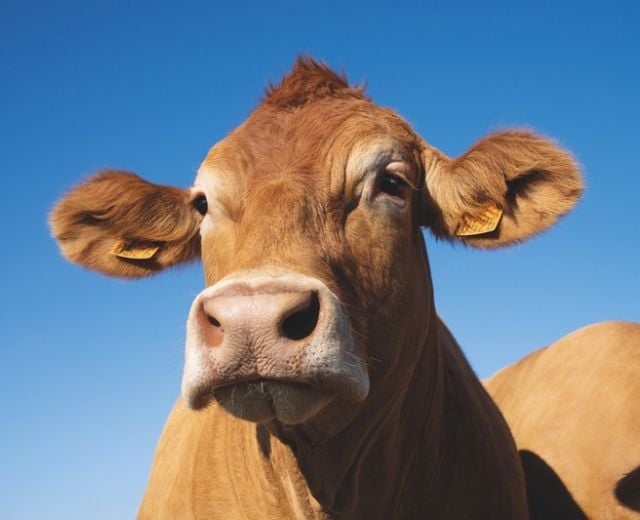
The Limousin has a distinctive coat colour, usually ranging from bright wheat to pale red, with lighter patches on the underside, the inner thighs and around the eyes and muzzle.
It is a large-sized breed, with well-developed musculature and a harmonious build.It has a long body, a broad back and well-muscled thighs: all characteristics sought after in meat production.
Limousines can be born with or without horns.
Where does the Limousin breed come from?
The Limousine breed originates from the former Limousin region, now part of Nouvelle-Aquitaine, on the western edge of the Massif Central. Its historical heartland includes, in particular, Corrèze, Haute-Vienne and Creuse.
In this livestock-farming region, animals have long been used for farm work. Limousin cattle were used for farm work before being fattened and sold for their meat.
The species has gradually adapted to its environment. The climate, terrain and forage resources have all played a part in shaping this breed of cattle, which is renowned for its hardiness and its ability to make the most of grassland.
A turning point came in 1886 with the creation of the Herd-Book Limousin, the breed’s pedigree register. Then, during the century, the mechanisation of agriculture led to a change in how the breed was used: the Limousin gradually became specialised in meat production.
Thanks to its suitability for meat production, its maternal qualities and its hardiness, it is spreading to new regions of France and expanding internationally. Today, it is bred as a purebred or used for cross-breeding in more than 80 countries, across five continents.
The Limousine in figures
1,001,000 Limousin cows recorded in France as at 1 January 2025, according to data from the GEB (Groupe Économie du Bétail), as reported by AgroParisTech.
A beef breed with many fine qualities
The Limousin is a suckler cattle breed, reared primarily for meat production . What sets it apart is that it combines recognised butchery qualities with the maternal traits sought after by breeders. Its musculature and conformation are valued for meat production. Its maternal qualities, hardiness and ease of calving also make it a valuable choice for suckler herds.