
Biguine, the Brahman ambassador at the Paris International Agricultural Show: a unique event not to be missed!
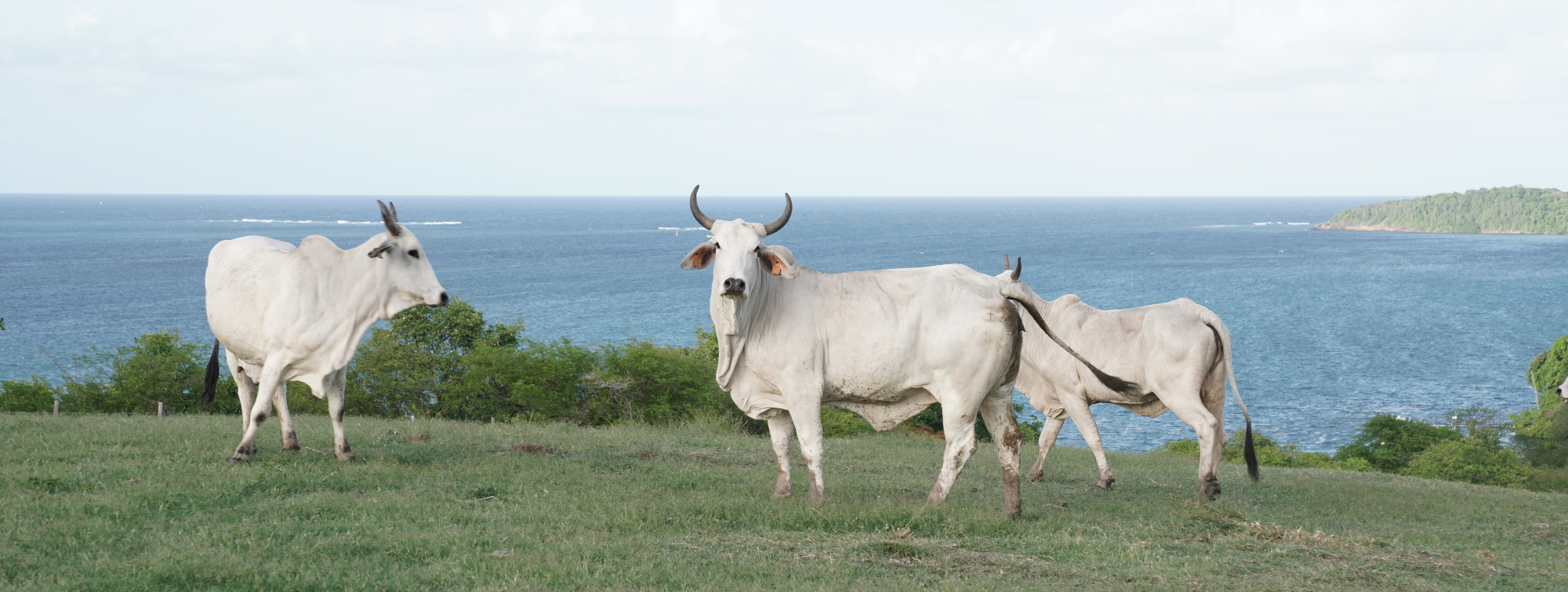
Following the decision by cattle selection organizations not to participate in the Concours Général Agricole animal competition, cattle and the mascot will be exceptionally absent from Pavilion 1.
A strong symbol for the 2026 Show
While Biguine and cattle will not be physically present at this edition, their place in the history and identity of the Paris International Agricultural Show remains essential. Through Biguine, the Show reaffirms its commitment to all French agricultures, from mainland France to the overseas territories.
In 2026, the Paris International Agricultural Show remains a place for meetings, knowledge-sharing and dialogue between farmers and the general public. Coming to the Show means supporting agricultural sectors and the people who keep them alive, in a particularly challenging year for livestock farming.
While Biguine and cattle will not be physically present at this edition, their place in the history and identity of the Paris International Agricultural Show remains essential. Through Biguine, the Show reaffirms its commitment to all French agricultures, from mainland France to the overseas territories.
In 2026, the Paris International Agricultural Show remains a place for meetings, knowledge-sharing and dialogue between farmers and the general public. Coming to the Show means supporting agricultural sectors and the people who keep them alive, in a particularly challenging year for livestock farming.
Biguine, the mascot cow of the Paris International Agricultural Show 2026
A first! For its 2026 edition, the Paris International Agricultural Show makes history by honoring an ultramarine cattle breed: the Brahman.
Straight from Martinique, Biguine is its mascot and becomes the star of France’s largest agricultural show. Welcomed in Haute-Saône until the event, she will be accompanied by her breeder, André Prosper, and four of her companions during her stay at Paris Expo Porte de Versailles. Let’s meet her!
Straight from Martinique, Biguine is its mascot and becomes the star of France’s largest agricultural show. Welcomed in Haute-Saône until the event, she will be accompanied by her breeder, André Prosper, and four of her companions during her stay at Paris Expo Porte de Versailles. Let’s meet her!
An unusual look
Biguine was born in 2019 on André Prosper's farm in La Trinité, Martinique.
"She walked toward me, it looked like she was doing ballet. That’s how she got her name 'Biguine,' which is a very expressive and tender Creole dance!" recalls André.
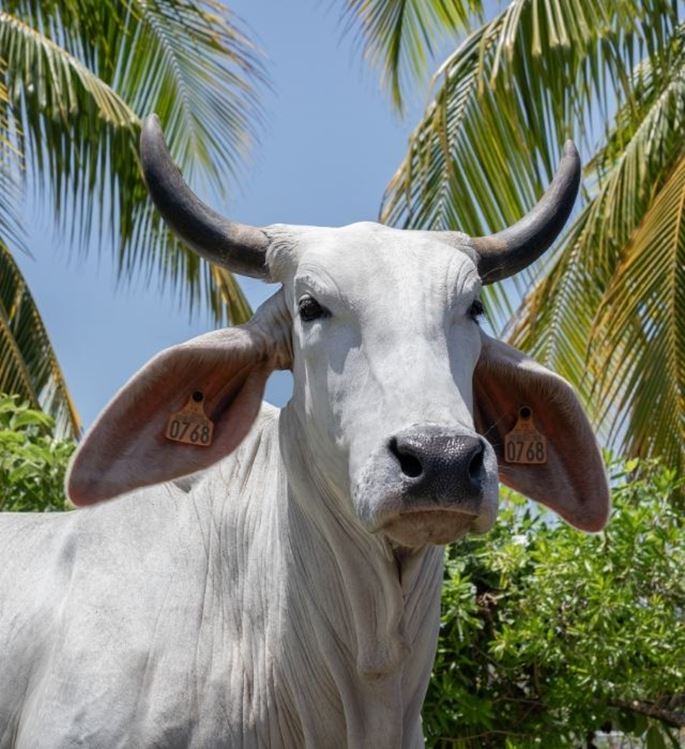
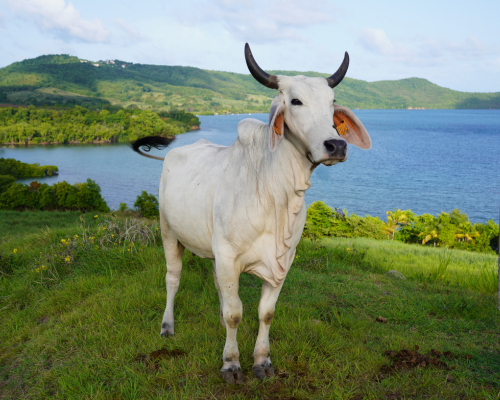
Majestic and approachable, the ambassador has already shown her maternal instincts twice. A direct descendant of Indian zebu, Biguine makes an impression with her imposing hump above the withers, long drooping ears, black muzzle, and pleated skin around her chest.
While she wonderfully represents the Martiniquais cattle, predominantly gray, white, and horned, the Brahman breed is often dressed in black or red elsewhere in the world.
A rustic cow
Biguine is resistant to heat, humidity, and tropical parasites.
The herds are mostly raised on grass, with a particular talent for utilizing coarse forage. Although the first calf arrives rather late, after 3 years, the mothers can produce until the age of 15.
For André, the Brahman breed "symbolizes both productive and sustainable agriculture, contributing to the development of resilient livestock production in the face of climate change."
The herds are mostly raised on grass, with a particular talent for utilizing coarse forage. Although the first calf arrives rather late, after 3 years, the mothers can produce until the age of 15.
For André, the Brahman breed "symbolizes both productive and sustainable agriculture, contributing to the development of resilient livestock production in the face of climate change."

André, a committed breeder
In search of an alternative to sugarcane cultivation, which was in a tough spot at the time, Roger Prosper turned to livestock farming and introduced the first Brahman cattle into his son André’s life in 1975. This marked the beginning of a beautiful story.
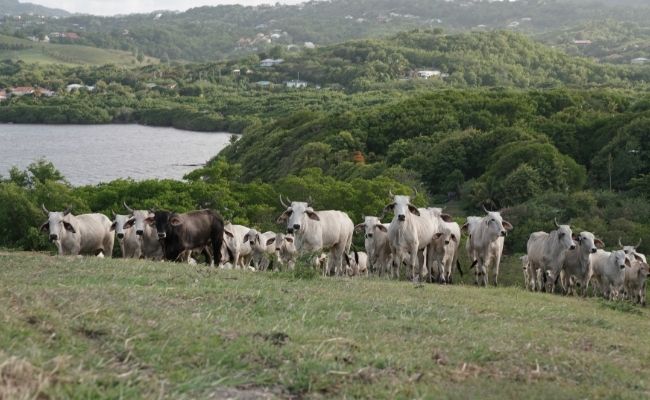
André Prosper is now an employee at the Galion agricultural farm, where he manages a herd of 300 Brahman cows. A passionate breeder, he has been working on the development of the breed for 40 years and has no plans to stop.
André Prosper is now an employee at the Galion agricultural farm, where he manages a herd of 300 Brahman cows. A passionate breeder, he has been working on the development of the breed for 40 years and has no plans to stop.
"The further we go, the greater the pride: that of the Overseas Territories, the breeders, and all of French agriculture."
Jérôme Despey
President of the Paris International Agricultural Show

Did you know?
- The name Brahman echoes the word "Brahmane," a traditional Indian caste.
- The breed was first developed in the United States before reaching Martinique in the 1950s.
- The Union of Brahman Cattle Breeders (UEBB) organizes the industry in Martinique and Guyana.
- Over 45,000 cattle are registered in the Breed's Genealogical Book to date.
- Brahman is also used in crossbreeding with meat breeds like Charolais or Limousine to combine rusticity with better meat conformation. These herds are referred to as "Brahmanized" herds.
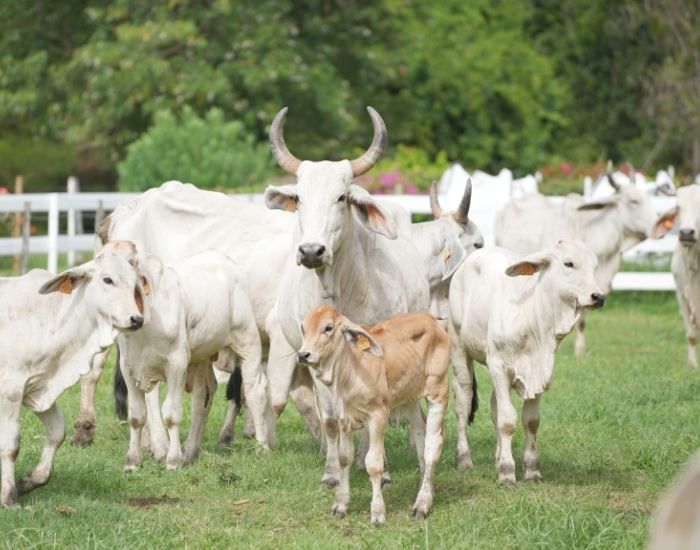
The Brahman breed presented by André.
Buy my ticketsSources :