
The Brahman: discover the cattle breed suited to tropical climates
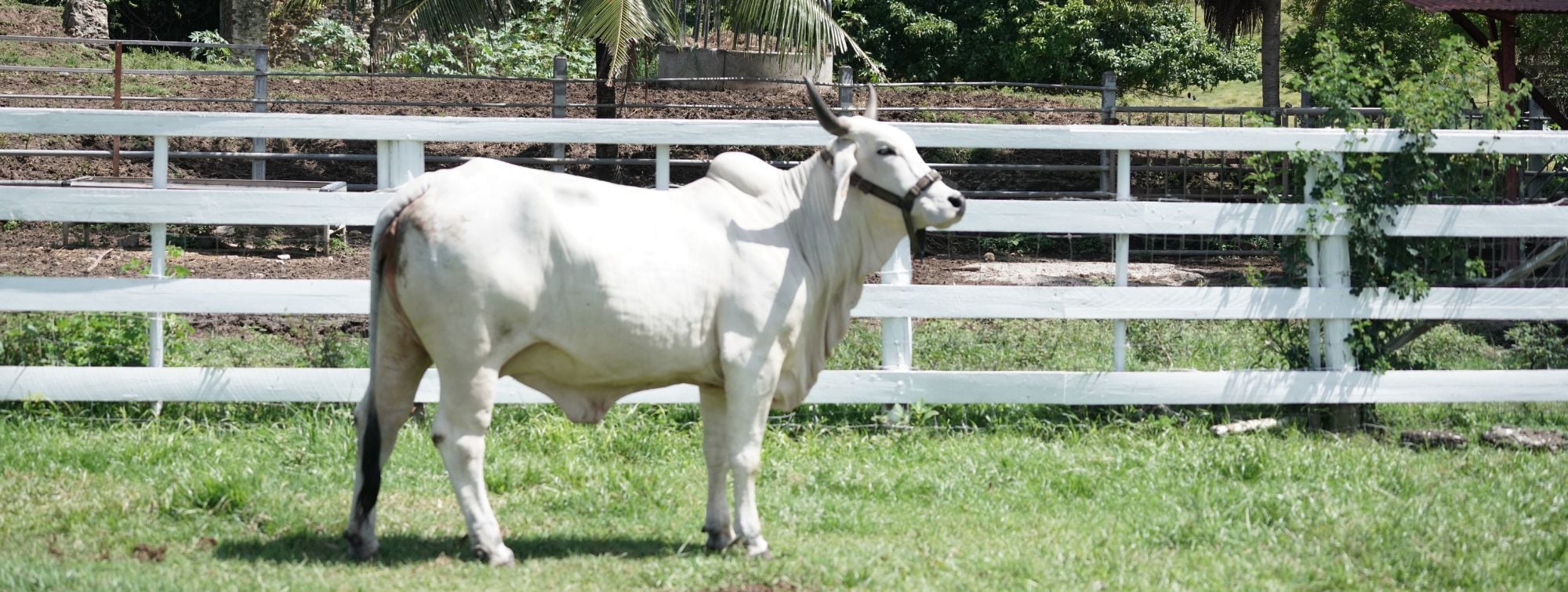
Meet Biguine, the 2026 Brahman ambassador for the International Agricultural Show
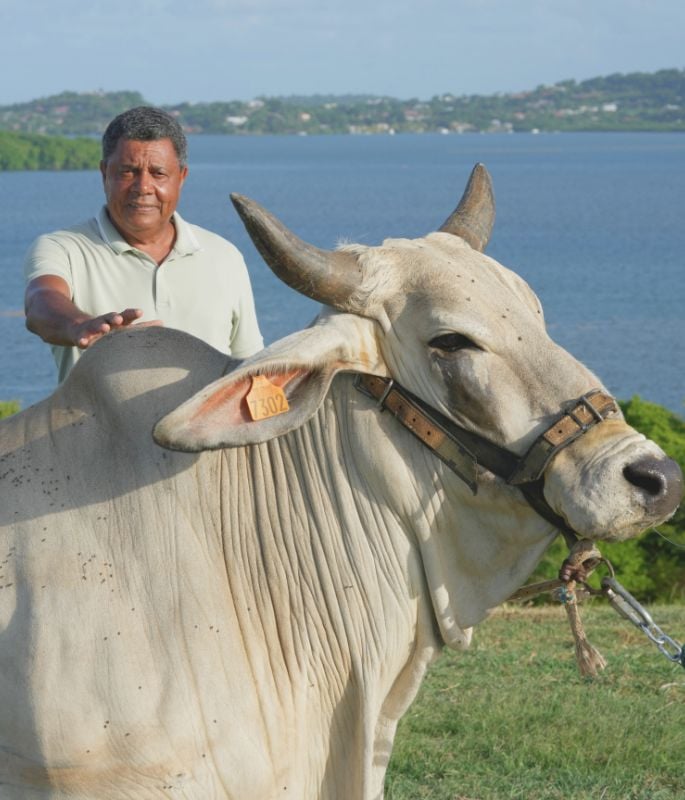
Who is Biguine?
Following the decision by the cattle selection organisations not to take part in the Concours Général Agricole livestock competition, cattle and the mascot were, exceptionally, absent from Pavilion 1 2026
A true Martinican through and through, Biguine was born in 2019 at the Galion livestock farm in the commune of Trinité, in the east of the island. A worthy descendant of the Indian zebu, she perfectly exemplifies the characteristics of the Brahman breed: a white coat with a silvery-grey sheen, long horns, a hump on her shoulders, very loose skin around her neck (known as a dewlap), large drooping ears and a black muzzle. Amongst the herd, she leaves no one indifferent with her natural elegance, her magnificent horns perched atop her head and her piercing gaze, framed by black.
As for his character, Biguine made his mark right from the very start. Whilst her mother stayed in the background, the newborn had other ideas and instinctively went to meet her breeder : “She came towards me; it was as if she were doing ballet steps. Hence its name, ‘Biguine’, , which is a very expressive Creole dance, full of tenderness!””, recalls André. Friendly and cheerful, she radiates happiness and has already demonstrated her maternal instincts on two occasions.
A closer look at the Brahman breed
Native to the United States, where it was developed from zebu populations originating in India, the Brahman is a breed of cattle particularly well-suited to hot climates. Its heat tolerance, hardiness and maternal qualities explain why it is of interest to breeders, particularly in Martinique and French Guiana
How can you recognise a Brahman?
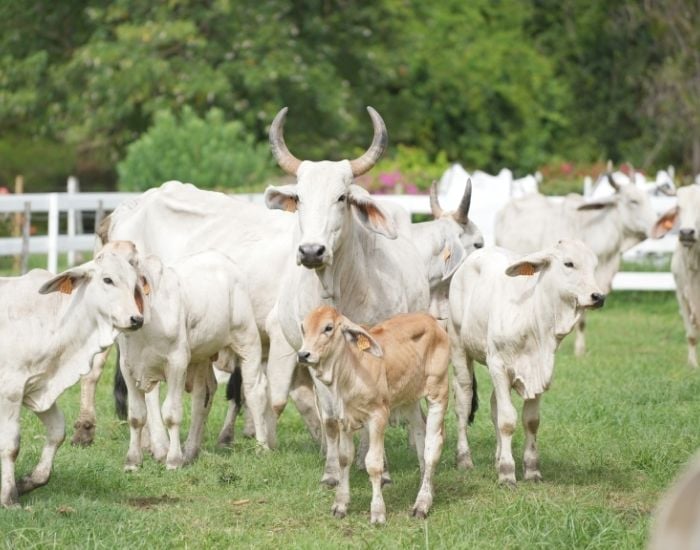
The Brahman belongs to the zebu group, a type of cattle known as Bos indicus. It can be recognised, in particular, by several physical characteristics:
- A muscle bulge at the withers
- Supple skin and a fold under the chin
- Large floppy ears
- A coat that is generally grey or red, with shades varying from animal to animal.
The Brahman: from India to the cattle farms of Martinique and French Guiana
The history of the Brahman began in India, the cradle of several zebu populations from which the lineages that gave rise to the breed originated.
In the 20th century, this breed made its way across the Atlantic. The first American Brahman cattle arrived in Martinique in the 1950s, where cattle farming began to develop.
Today, the Brahman breed plays an important role in the cattle industry in Martinique and French Guiana. In particular, it provides a genetic basis for breeding programmes and certain cross-breeding schemes designed to improve herd performance.
According to figures from the Brahman Cattle Breeders’ Union (UEBB), approximately 45,000 head of cattle are registered in the breed’s herd book in Martinique and French Guiana.
A hardy variety, well-suited to tropical climates
The Brahman possesses qualities that are particularly sought after on farms facing heat, periods of drought and pest pressure. The Brahman breed can make good use of roughage, with a supplementary diet tailored to the animals’ needs and the resources available.
Maternal traits sought after by breeders
The Brahman is not distinguished solely by its hardiness. Her maternal qualities represent another important asset for breastfeeding systems. These qualities are particularly valuable in extensive livestock farming systems and in cross-breeding programmes, where it can be used as a maternal line. Performance does, however, vary depending on the individual animals, herd management, feeding, health and selection objectives.
The Brahman, a beef breed
The Brahman is mainly reared for meat production. In Martinique, it is used as a pure breed and in cross-breeding with European breeds, with a view to improving cattle production. The results depend on the animals, the cross-breeding and the rearing conditions.
